The word Nasya is derived from ‘Nasa’ Dhatu. In Ayurvedic texts, Nasa Dhatu is used in the sense of nose.
DEFINITION OF NASYA:
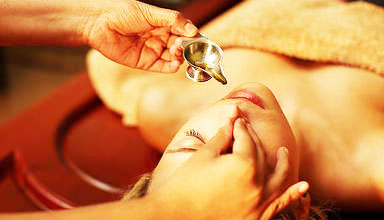
In Ayurveda, the word Nasya has been taken specifically to mention the root of administration of drugs by nose
CLASSIFICATION OF NASYA:
Nasya is classified in various ways by different Acharyas. It is mainly classified according to its mode of action i.e. Shodhana, Shamana, etc and on the basis of various forms of drugs preparation utilized for the Nasyakarma e.g. Churna, Sneha, etc. According to various Acharyas, the classifications of Nasya are different
INDICATION OF NASYA:
Charaka has described the following general indications where Nasya therapy should be used.
Danta Stambha
Danta Shula (dental pain)
Danta Harsha (sensitivity)
Danta Chala (loose teeths)
Mukharoga
Upajihvika
Shirostambha
Shirahshula
Akshishula
Raji-Netra Roga
Timira
Galashundika
Galashaluka
Galaganda
Hanugraha etc.
CONTRA INDICATION OF NASYA:
Bhuktabhukta
Ajirna
Pita Sneha
Pita Madhya
Pita Toya Snehadi
Patukamah Snatah Sirah Snatukamah Kshudarta etc.
COURSE OF NASYA:
According to Sushruta – 1,2,7,21 days
According to Bhoja — 9 days
According to Vagbhatta — 3,5,7,8 days
DOSE OF SNEHANA NASYA:
A) Hina matra – 8 drops in each nostril
B) Madhyama matra-16 drops in each nostril (Shukti Pramana)
C) Uttam matra -32 drops in each nostril(Panishukti Pramana) (Su.Chi.40)
TIME FOR GIVING NASYA:
a) As per seasons;
Rutu -Nasya to be given
Grishma -Morning
Shita -Noon
Varsha -When day is clear
Sharada,Vasanta -Morning (Vagbhatta)
Shishira,Hemanta -Noon
Grishma,Varsha -Evening
b) As per Doshaja Vikara:
Doshaja Vikara Nasya to be given
Kaphaja Vikara – Morning
Pittaja Vikara -Noon
Vataja Viikara -Evening
BENEFITS OF SNEHANA NASYA:
Patient who regularly observes Nasya Karma does not become victim of diseases of eyes, ears and nose.
His hair and beard does not turn gray.
His hair doesn’t falls but instead grows fast. Diseases like common cold, migraine, headache, facial paralysis etc. can be alleviated. The joints, sinus, tendons and bones of his cranium acquire great strength.
His face becomes cheerful and plump and his voice becomes mallow, firm and stentorian.Strength of all sense organs increases greatly. There will be no sudden invasion of disease in the upper parts (Urdhwajatrugata) of the body. He experiences the symptoms of old age later. Disease of the supra clavicular region are cured in the person who practices Nasya. He gets clarity of senses, good smell of mouth and the strength of jaw, teeth, arms, chest, etc. He never suffers from the premature appearance of wrinkles, premature hair falling and Vyanga.
ACTION OF THE NASYA KARMA:
The mode of action of Nasya Karma can be explained as follow:
Ayurvedic Point of View:
In Ayurvedic classics, the mode of action of Nasya Karma is explained indirectly. According to Charaka Samhita, the drug administered through the nose enters in the Uttamanga and eliminates the morbid Doshas residing there.
In this context Sushruta has clarified that Shringataka marma is a Siramarma formed by the union of Siras (blood vessels) supplying to nose, ear, eye and tongue. Thus we can say that drug administered through Nasya may enter the above Sira and purifies them.Under the complications of Nasya Karma, Sushruta has mentioned that excessive eliminative errhine may cause Mastulunga Srava (flow of cerebrospinal fluid out to the nose). which suggest the direct relation of Nasal pathway to brain.
Indu, the commentator of Ashtanga Samgraha, opined that Shringataka is the inner side of middle part of head i.e. “Shiraso Antar Madhyam.” Drug administered through nose -the doorway to Sheera. Reaches the Shringataka marma of Head (Sheera), which is a Sira marma and formed by the Siras of nose, eyes, Kantha and Shrotra.
The drug spreads by the same route.
Scrapes the morbid Doshas of Urdhwajatru and extracts them from the Uttamanga.All ancient Acharyas have said considered Nasa as the gateway of head. It does not mean that any channel directly connects brain and nose, but it may be suggestive of any connection through blood vessels, lymphatic and nerves.
According To modern point of view:
There is no direct pharmacological correlation between nose and brain.However the olfactory area is the only place in the whole human body where there is direct contact between the outer surface and Central Nervous System. However the effect of drug on the brain, administered through the nasal pathway can be seen in followed examples. The nose is used as a route of administration for inhalation of anaesthetic drugs.
In modern medicine system, anterior pituitary hormones, in the form of nasal spray are being used since a long time. Nasal administration of an LRH antagonist for 3-6 months was found to be effective in inhibiting ovulation as a contraceptive measure (Berauist et al 1979).
Thus to understand the action of Nasya drug on central nervous system it is necessary to know the probable pathways of action of Nasya dravya. On the basis of fractional stage of Nasya Karma procedures, we can draw certain rational issues that are as follow:
(1) At the level of blood circulation
(2) At the level of lymphatic channels including C.S.F.
(3) At the level of neuroendocrinal and neurovascular stimulation
(1) At the level of blood circulation:
Many drugs including hormones are administered through the nose for their effective therapeutic results. However, these drugs are believed to be rapidly absorbed through the mucous membrane and enter into the general blood circulation of the body. Specific circulation may probably be involved for which, the posturing of the
patient may be important. This includes the entry of the drugs absorbed into the facial vein, through which the back flow of the blood occurs through the inferior ophthalmic vein and to the venous sinuses of the brain.
(2) At the level of lymphatic channels including C.S.F.:
The lipid soluble substances can easily and rapidly be transported across the epithelial membrane e.g. Taila, Kshara, Ghrita, etc. These lipid soluble substances can also gain an assess into the lymphoid tissue. Thus, a rapid circulation through the lymphatic channels denotes a positive phenomenon. On the other hand, the extended arachnoid sheath from the brain to the submucosal area of the nose is the other path for the absorption of drugs directly through the nose.
(3) At the level of neuroendocrinal and neurovascularstimulation:
The stimulation of the olfactory system during the course of Nasya Karma is other possibility. The olfactory nerve functions by means of chemoreceptors. The chemical characteristic of the particle that has reached into the nose will be identified by the nerves, which carry the stimuli to the olfactory bulbs. Further, the stimuli will be carried to the high centres, probably involving the hippocampus, limbic system, hypothalamus, etc. they’re the drug absorption deeper into the nasal drug delivery may influence certain enzymes and hormones in the body.
Headache is a main symptom now a days beacuase of many reasons like stress, wrong diet, using of headphones, using og of mobile phones, long journey, night duties..here we mentioned about headache,symptoms causes, remedies are clearly mentioned in details
Author: Dr.Milind KumavatM.D.Ayurveda
Causes
The general Nidanas for Shiroroga has been described in Charaka Samhita, Ashtanga Samgraha, Ashtanga Hridaya, Yoga Ratnakar and Harita Samhia, While the specific Nidanas for Vatika Shirahshula has been mentioned in details in Charaka Samhita and Harita Samhita only. Sushruta has mentioned the Vatika Shirahshula as Animitta Shiroruja. Here, general causes of Shiroroga has been tabulated as below.Acharya Charaka has mentioned etiology of Shiro Roga in Kiyantah Shirasiya Adhyaya of Sutrasthana.Suppression of natural urges, sleep during the day time, vigilduring the night, intoxication, speaking aloud, exposure to frost andeasterly wind, sexual indulgence, inhalation of undesirable smell,exposure to dust, smoke, snowfall and sun, intake of heavy and sour food and rhizomes including tubers etc. in excessive quantity, excessive intake of cold water, injury to the head, vitiation of Ama (a product of improper digestion and metabolism), lamentation, suppression of tears, advent of cloud, mental stress and adopting regimen contrary to these prescribed for the locality and season; the Dosha get aggravated resulting in the vitiation of Rakta Dhatu in the head, leading to the manifestation of Shiro Roga.Another reading for the term Dushtamat is Ushnamat. If the latter reading is adopted, the interpretation would be that such diseases are caused by heat and Ama. It may further be stated in this connection that in all types of diseases relating to the head, vitiation of Rakta Dhatu is regarded as an invariable cause.Acharya Vagbhata and Yogaratnakara have included excessivesudation, Krimi, avoidance of pillow during sleep, aversion to massage and constant looking at objects; as its etiological factors, but not mentioned head injury, sexual indulgence, exposure to dust and snow, heavy and sour food, advent of cloud, mental stress and adopting regimen contrary to locality and season, in the general etiological factors for disease occurring in head. In Harita Samhita Shirahshula is specifically mentioned under the heading of Karmaja Vyadhi.After assessing the above terminologies it can be concluded that the pain which arises in the head is termed as headache. As Shirahshula occurs due to vitiation of Doshas, anything which can aggravate them can be the arise. If it is among them Vegadharan (withholding the natural urges as that of micturition, defaecation, sneezing etc.) sleeping much in the daytime, awakening in the night, use of alcoholic drinks, loud speaking, affection with wind, snow, excessive indulgence in sexual intercourse, affection with bad smell, dust, fume, hot sun, eating undigestable, uncooked, very cold and non-nutritious food, head injury, sorrow, worry, mental tension etc. Vatadosha gets vitiated which by itself or along with other Doshas causes headache by settling in Shira.
Vegadharana :
Vegas are the involuntary actions of the body as that of excretionof waste products from the body as that of micturition, defaecation, thirst, hunger, sneezing etc. which are the natural urges which one cannot avoid because it is really needed for normal functioning of the body. Being involuntary in action (the functions of autonomic nervous system)trying to withhold it will upset Vata as Vegapravartan is the function of Vata. Malavegadharana causing Malabandha or constipation is the common cause of headache. Mutravegadharana, beyond the capacity of Mutrashaya (urinary bladder) can also cause vitiation of Vata and so Shirahshula. Shirahshula can be the result of Vegadharana of Vit, Ksudha, Ashru etc.
Atyuccha Bhashana:
Talk much loudly and for a long time cause Kaphakshaya withvitiation of Vata, affecting dryness of mouth, severe headache,horseness of sound etc. (affecting vocal cords) because of the vitiation of Vata situated in head, Shula will be felt causing Shirahshula.
Himat :
Shita or coldness is one of the qualities of Vata. Affection with cold wind, walking in cold weather uncovered, eating cold food etc. increases the coldness of the body depressing body temperature(affecting various systems). It causes several Vatika disorders asShirahshula (headache), Ardita (facial palsy) etc. due to the aggravation of Vata, by its Atishita, constriction of the blood vessels causing headache.
Atapat:
Walking under hot sun or working outside under hot sun causessevere headache because of vitiation of pitta aggravated by the similar quality of it (Ushna). Panther type of Vatapaittika type of headache occurs more with Atapasevana. Increased Pitta, causes distruction and decrease of Kaphadosha and vitiation of pilla Suryavarta type of Shirahshula also occur due to Atapasevana. Affection with very hot sun can cause heat stroke in which headache is the most important symptom coming caroditation. Fainting, nausea, vomiting etc. are other symptoms of it.
Divasvapana:
Sleeping much in daytime causes increase in Kapha and Meda. As less energy is needed or utilized during sleep pitta is used very littleand Kapha gets increased in amount increasing Medodhatu (excess of fat of Meda). The increased Kapha Dosha and Medodhatu itself can cause Shirahshula of Kaphaja type or cause Aavarana to Vata causing headaches of Raktatimardaja type of headache.
Awakening in the night:
6-8 hours sleep is needed for an average human being for the total rest of physical and mental functions. The brain also relaxes causing more production of Kapha and less energy is produced during the period of sleep. Awakening for a long time in the night alleviates Vata or vitiates it, the vitiated Vata deranges the functions of other Doshas as Pitta also resulting into loss of memory or inability to concentrate in anything, loss of appetite, general body weakness, severe headache etc. As nidra (sleep) is considered to be one among the three pillars which support the body as a building.
Affection with bad or pungent smell, dust etc.:
Atiyoga of any sense organ can cause vitiation of Doshas. Affection with bad (which one does not like) or pungent odour for long time, reading or watching movie for very long time, affection with dust,eating uncooked food etc. can cause headache due to vitiation ofDoshas, mostly Vata.
Dushtamabhojanat:
Eating undigestable food, non-nutritious food, the food one whichdoes not like etc. can cause headache and at times as a prodromalsymptom of other disorders as Ajirna (indigestion), Chhardi (Vomiting) etc. Food materials has got very important place in causing headache. As it is said that the food materials containing caffeine as coffee causes rebound headache as it first gives relief from headache by vasoconstriction but later one will cause rebound vasodilatation and headache. Chocolates, cheese, ice cream, food materials containing varieties as that of Chinese restaurant food materials etc. can cause Shirahshula. (British Medical Journal 30th July 1977).Food materials as cured meat can cause headache as nitrites areadded to salt while preparing to give uniform red colour but this nitrite causes severe headache as after eating western food materials as hot dog, bacon, ham or salami and so it is otherwise said to be hot dog headache in modern medicine. This type of headache will be severe and unilaterally felt in Ardhavabhedaka.Another type of headache is the Chinese restaurant syndrome asthat because of the presence of monosodium glutamate added whilecooking the Chinese meal. This headache will be felt as symptomcomplex of pressure and tightness in the face, burning over the trunk, neck and shoulders and a pressing pain in the chest which may follow 20-25 minutes after eating a Chinese meal.
Atishitahara:
Holding ice or ice-cream in the mouth or swallowing it as a bolusmay cause local pain in the palate or throat due to vitiation of Vata. It may also refer pain to the forehead or temple via the Tridharanadi. (Trigeminal nerve) and to the ear through the vagus nerve; this condition is mentioned as ice-cream headache in modern science. Eating other food material just after taking out from a fridge or freezer without warming it can also cause headache of this type.
Madat (Usage of Madhya):
Usage of Madya or alcohol can also cause headache mostly in those persons who have a tendency or who is having the Shirahshula(headache) of Ardhavabhedaka (Migraine) type. Any type of Madhyacontain ethyl alcohol as an active ingredient which is a vasodilator. This vasodilatation (Dhamanee vikasam) causes headache of throbbing type or hangover headache. The average rate at which a normal sized adult metabolizes alcohol is about 10 m per hour (Ritchie 1970). It is first oxidized to acetaldehyde by alcohol dehydrogenase and acetaldehyde is then converted to or used in the synthesis of Cholesterol and fatty acids. Consuming alcohol in very large amount may affect further oxidation of acetaldehyde causing increased amount of the same in blood, giving rise to the symptoms of throbbing headache, hot flush of face, nausea, vomiting, giddiness etc. followed by hypotension and pallor.
Use of Madakaradrugs:
Use of Madakaradrugs as Ahiphena, Bhanga etc. in highest amount can cause dryness of mouth, sensation of warmthy mild frontal headache (Shirahshula) due to vasodilatation. Otherwise it alleviatespain by depressing the mental functions.
Atimaithuna:
There are three kinds of headache associated with Maithunakarma (Sexual activity). The first is a dull headache commonly bilateral and will be felt on the back of the head (occipital area) and occurs as sexual excitement mounts. It is probably related to excessive contraction of head and neck muscles since it can be prevented orrelieved by deliberate relaxation of those muscle groups (Paulson and Kalwans 1974). The second type of headache, more severe andexpulsive in onset, appears immediately before or at the moment oforgasm, presumably caused by the increase in blood pressure at thattime. The third type arise during coitus (Maithunakarma) is felt worstwhile standing up and some postulate that arachnoid membrane may torn off during the physical stress causing headache. Sexual intercourse has been known to precipitate subarachnoid haemorrhage (Adam 1939).
Dhumat:
Dhumapana (smoking cigarette, bidi etc.) done in continuoussuccession for a long time causes constriction of blood vessels firstfollowed by rebound vasodilatation because of the presence of nicotine in it. Dhuma containing mostly carbon monoxide and carbon dioxide causes headache due to anoxia. A rebound vasodilatation may occur after (tobacco smoking) cigarette smoking which contain nicotine the vasoconstrictor and so rebound headache may occur even if it gives temporary relief from headache first. The fumes of cardmium, temporary relief from headache first. The fumes of cardmium, phosphine, bromine, hydrogen, cyanide, aldehides, naphthalene, turpentine, polyester resins, amylnitrate, stearine etc. causes severe headache and the workers of the factories of such plants will get affected by such fumes who will become prey to such chronic type of headache.According to the modern medicine headache is not an independent disease but only a mere symptom present in the various types of diseases. Headache is specially predominatly present in the intracranial disorders. Charaka has described headache as an independent disease; hence various etiological factors are obtained in Ayurveda Sahityam can be classified as follows:Type Charakadi Texts
1. Aharaja Hetu
Guru-Amla-Haritashaka, Shitambu Sevana, Cooked or uncooked food stomach full diet,Chocolate eating individual types of meats and mushroom, large interval between meals.
2. Viharaja Hetu
Sleeping during the day, and awaking at night, talking in very high tone, excessive sleep, excessive coitus, Tusharambukrida, Adhapratatekshana, Atiasanam, excessive speech. Ekagra-drishtidarshana, getting wet in the rainy season, Aatapsevanam, prolonged T.V., Video viewing.
Inhalation of the fresh morning air, Inhalation of smoke, dust in excess, Inhalation of strong smell, Himsevanam, Unsuitable smell inhalation, pollution, Industrial sound pollution, Climatic changes, atmospheric pressure or deficiency.
5.Diseases
Intracranial disorders, accumulation of Aam Dosha, Dental and Nasal diseases, pyrexia, viral infection, tumours, Adenomas, Abscesses, constipation.
Holding of the urge of stool excretion, urine excretion, urge of sneezing, avoidance of sleep.
9. Shodhanopacharaj Hetu
Abhayanga, excessive Raktamokshanam.
10. Medicinal Causes
Excessive consumption of hot and spicy foods,
11. consumption of toxic drugs
Amines, Hystamine, Cadarine. Toxic Causes Lead poisoning, Carbon monoxide and benzene vapours. The etiological factors of Vataja Shiroroga are mentioned only inCharaka Samhita and Harita Samhita which is given below : उच्चैर्भाष्यातिभाष्याभ्यां तिक्ष्णपानात प्रजागरात् |शितमारुतसन्स्पर्शाद् व्यवायोद्वेगनिग्रहात् |उपवासादभिघाताद विरेकाद् वमनादति |बाष्पशोकभयत्रासाद्भार मार्गातिकर्षनात | (Cha. Su. 17/16-17) •अतिभारातियोगेन अतितिक्ष्णोष्णभावत:| विनाभ्यगेन ………………………….( Ha. Sam. 43)These factors can divided into following three categories.
Aahar Hetu (Dietary factors)
1. Tikshna pana (Strong alcohol consumption)2. Ati Vireka (Excessive purgation)3. Ati Vamana (Excessive vomiting)
Vihar Hetu (Recreational factors)
1. Ucchairbhashya (High tone speech) 2. Atibhashana (Excessive talking) 3. Prajagara(Night waking) 4. Shitamarutasparsha(Contact of cold wind) 5. Ati Vyavaya (Excessive coitus) 6. Vega Nigraha (Holding of natural urges of motion and urination) 7. Upavasa (Fasting) 8. Abhighata (Trauma/Injury) 9. Vyayama (Excessive exercise)YourBrainHealthTraining.com10. Bashpa (Excessive lacrimation)11. Ati Margakarshana (Excessive walking)12. Ati Bharavahana (Heavy weight lifting)
Manas Hetu (Psychological factors)
1. Shoka (grief)2. Bhaya (Fear)3. Trasa (Mental stress)All above mentioned causes are mainly responsible forDhatukshaya – particularly for Rasa Dhatu resulting in Vata Prakopa. In Charak Samhita Su. 28 it is clearly mentioned that, रसवाहिनि दुष्यन्ति चिन्त्यानां चाति चिन्तनात्. means Chinta, Shoka etc. are causative factor for Rasavaha Srotodushti ultimately resulting in Vata Prakopa and hence responsible for Vatika Shirahshula.
Ayurveda is not only the science but also the religion and philosophy. In Ayurveda detailed description of whole life journey mentioned. The ancient realised beings,sainds discovered the truth of Ayurveda. Through intensive meditation they manifested truth in daily life.
Author: Dr. Milind Kumavat
Ayurveda is not only the science but also the religion and philosophy. In Ayurveda detailed description of whole life journey mentioned.The ancient realised beings,sainds discovered the truth of Ayurveda. Through intensive meditation they manifested truth in daily life.
Ayurveda is the science of daily livings and correlation of the body to the natural wheather cycle.
Ayurveda mainly described by lord ‘Bramha’ he passes this knowledge to ‘Daksha Prajapati ‘ and Daksha Prajapati (son of lord Bramha) educates about this knowledge to ‘Ashwini Kumar’ then Ashwini Kumar’s passes this knowledge to lord ‘Indra’ (king of gods) then Indra educate about this knowledge to other ‘Rishi ‘ .
Branches of Ayurveda
Kaaychikitsa(physical treatment of human body)
Baal chikista (paediatrics treatment)
Grah chikista (spiritual treatment)
Urdhwanga chikista (upper body parts treatment)
Shalya chikista (surgical treatment)
Danshtra chikista (treatment for all poisons)
Jara chikista (geriatric treatment)
Vrush chikista (sexual treatment)
Main constituents of Ayurveda
Vaata It regulates all flows in the body
2. Pitta It regulates digestive power
3. Kapha It covers to all body parts and act as lubricant on all vital organs and joints
DHATUS – Main ingredients of body
1. Rasa (fluid – which nourishes to body)
2. Rakta (blood – which work as a food for all cells of body)
3. Mamsa (muscle – which covers to the delicate vital organs,performs the moments of the joints)
4. Meda (fat – maintains the lubrication of all the tissues)
5. Asthi (bones- which supports to the body)
6. Majja (bone narrow – fills up the bony spaces and carries motor and sensory impulses)
7. Shukra/Artav (reproductive tissues)
These all seven types are called as ‘DHATUS’ ,the human body consist of seven basic and vital tissues called Dhatu. These seven are responsible for whole structure of the body the Dhatus maintain the functions of the different organs, systems and vital parts of the body.
These all seven Dhatus play important roll in the development and nourishment of the body.
Mala (excretory material)
1. Purish (stool)
2. Mutra (urine)
3. Sweda (sweat)
Attributes (Gunas) and their actions
1. Heavy (guru)
2. Light (laghu)
3. Slow (manda)
4. Sharp (tikshna)
5. Cold (shita)
6. Hot (ushna)
7. Oily (shingdha)
8. Dry (ruksha)
9. Slimy (slakshna)
10. Rough (khara)
11. Dense (sandra)
12. Liquid (drava)
13. Soft (mrudu)
14. Hard (kathina)
15. Static (sthira)
16. Mobile (chala)
17. Subtle (sukshma)
18. Gross (sthula)
19. Cloudy (avila)
20. Clear (vishada)
DIAGNOSTIC PROCEDURES IN AYURVEDA
1. Naadi Pariksha (pulse examination)
2. Jivha Pariksha (tongue examination)
3. Mukha Pariksha (facial examination)
4. Oshta Pariksha (lip examination)
5. Nakha Pariksha (nail examination)
6. Netra Pariksha (eye examination)
7. Mala Pariksha (stool examination)
8. Mutra Pariksha (urine examination)
In Ayurveda, these eight procedures follow for diagnostic purpose but mainly naadi Pariksha (pulse examination) done by experienced Vaidya.
Treatment procedures in the Ayurveda
All ayurvedic treatment attempts to establish a balanced between the Doshas (vaata-pitta-kapha).
1. Shaman chikitsa (medicinal treatment)
Shaman chikitsa means treatment given in the form of herbal drugs
hi friends myself Dr Milind Kumavat I am master degree holder in Ayurveda.
I’m going to publish ayurveda4all blog For normal peoples who don’t know what is ayurveda and how ayurveda works,this blog will help to know details about ayurveda and this will educate peoples about ayurveda
Why do this?
Spread Awareness about ayurveda
solve queries about ayurveda
educate to all about ayurveda
so please stay with us and get benefits of real word of ayurveda









 ayurveda4all
